Shopping for the best AI photo editor? An AI photo editor is software that uses machine learning to help you get more done — it keeps getting smarter as the underlying models improve. Pricing, accuracy, and the size of the model behind the tool are the three factors that most affect daily usefulness. Whether you are a beginner or a pro, the right AI photo editor slots into your workflow and pays for itself fast. Below we compare features, pricing, and real output so you can choose with confidence.
Abiquo Enterprise Edition
Abiquo Hybrid Cloud Management Platform is a web-based cloud computing software platform developed by Abiquo. Written entirely in Java, it is used to build, integrate and manage public and private clouds in homogeneous environments. Users can deploy and manage servers, storage system and network and virtual devices. It also supports LDAP integration. == Hypervisors == Abiquo supports five hypervisor systems. VMware ESXi Microsoft Hyper-V Citrix XenServer Oracle VM Server for x86 KVM From version 3.1, it also supports multiple public cloud providers: Amazon AWS Rackspace Google Compute Engine HP Cloud ElasticHosts DigitalOcean Abiquo version 3.2 added: Microsoft Azure Abiquo version 3.4 added: Support for Docker hosts, adding multi-tenant networking, storage management and private registry management for Docker SoftLayer CloudSigma Later versions continued to add features including autoscaling on any cloud, integration to VMware NSX and OpenStack Neutron for software defined networking, guest config with cloud-init and integrated monitoring driving guest automation. == Storage services == Abiquo supports any vendor for hypervisor storage, and also supports tiered storage pools, enabling storage-as-a-service from specific vendors and technologies including: NFS Generic iSCSI NetApp Nexenta == SAAS version == In April 2014 Abiquo launched Abiquo anyCloud, a SAAS version of the Abiquo Hybrid Cloud Platform software. This version lets users manage public cloud resources from: Amazon AWS Microsoft Azure IBM SoftLayer DigitalOcean Rackspace Open Cloud (an OpenStack cloud) HP Public Cloud (an OpenStack cloud) Google Compute Engine ElasticHosts Additional security and process features include workflow, to have an enterprise administrator electronically sign off on changes, an audit trail of activity and the ability to share cloud accounts among and enterprise team in a secure way. == Reviews and awards == Finalist for the 2015 Cloud Awards Finalist for the 2015 UK Cloud Awards in the category Cloud Management Product of the Year EMA Radar for Private Cloud platforms 2013 Global Telecoms Business Innovation Summit and Awards 2013 (with Interoute) EuroCloud UK Awards
List of search appliance vendors
A search appliance is a type of computer which is attached to a corporate network for the purpose of indexing the content shared across that network in a way that is similar to a web search engine. It may be made accessible through a public web interface or restricted to users of that network. A search appliance is usually made up of: a gathering component, a standardizing component, a data storage area, a search component, a user interface component, and a management interface component. == Vendors of search appliances == Fabasoft Google InfoLibrarian Search Appliance™ Maxxcat Searchdaimon Thunderstone == Former/defunct vendors of search appliances == Black Tulip Systems Google Search Appliance Index Engines Munax Perfect Search Appliance
Timeline of operating systems
This article presents a timeline of events in the history of computer operating systems from 1951 to the current day. For a narrative explaining the overall developments, see the History of operating systems. == 20th Century == == 1940s == 1949 EDSAC was considered the first operating system developed by Maurice Wilkes and manufactured by the University of Cambridge == 1950s == 1951 LEO I 'Lyons Electronic Office' was the commercial development of EDSAC computing platform, supported by British firm J. Lyons and Co. 1953 DYSEAC - an early machine capable of distributing computing 1955 General Motors Operating System made for IBM 701 MIT's Tape Director operating system made for UNIVAC 1103 1956 GM-NAA I/O for IBM 704, based on General Motors Operating System 1957 Atlas Supervisor (Manchester University) (Atlas computer project start) BESYS (Bell Labs), for IBM 704, later IBM 7090 and IBM 7094 1958 University of Michigan Executive System (UMES), for IBM 704, 709, and 7090 1959 SHARE Operating System (SOS), based on GM-NAA I/O == 1960s == 1960 IBSYS (IBM for its 7090 and 7094) 1961 CTSS demonstration (MIT's Compatible Time-Sharing System for the IBM 7094) MCP (Burroughs Master Control Program) for B5000 1962 Atlas Supervisor (Manchester University) (Atlas computer commissioned) BBN Time-Sharing System GCOS (GE's General Comprehensive Operating System, originally GECOS, General Electric Comprehensive Operating Supervisor) 1963 ADMIRAL AN/FSQ-32, another early time-sharing system begun CTSS becomes operational (MIT's Compatible Time-Sharing System for the IBM 7094) JOSS, an interactive time-shared system that did not distinguish between operating system and language Titan Supervisor, early time-sharing system begun 1964 Berkeley Timesharing System (for Scientific Data Systems' SDS 940) Chippewa Operating System (for CDC 6600 supercomputer) Dartmouth Time-Sharing System (Dartmouth College's DTSS for GE computers) EXEC 8 (UNIVAC) KDF9 Timesharing Director (English Electric) – an early, fully hardware secured, fully pre-emptive process switching, multi-programming operating system for KDF9 (originally announced in 1960) OS/360 (IBM's primary OS for its S/360 series) (announced) PDP-6 Monitor (DEC) descendant renamed TOPS-10 in 1970 SCOPE (CDC 3000 series) 1965 BOS/360 (IBM's Basic Operating System) DECsys TOS/360 (IBM's Tape Operating System) Livermore Time Sharing System (LTSS) Multics (MIT, GE, Bell Labs for the GE-645) (announced) Pick operating system SIPROS 66 (Simultaneous Processing Operating System) THE multiprogramming system (Technische Hogeschool Eindhoven) development TSOS (later VMOS) (RCA) 1966 DOS/360 (IBM's Disk Operating System) GEORGE 1 & 2 for ICT 1900 series Mod 1 Mod 2 Mod 8 MS/8 (Richard F. Lary's DEC PDP-8 system) MSOS (Mass Storage Operating System) OS/360 (IBM's primary OS for its S/360 series) PCP and MFT (shipped) RAX Remote Users of Shared Hardware (RUSH), a time-sharing system developed by Allen-Babcock for the IBM 360/50 SODA for Elwro's Odra 1204 Universal Time-Sharing System (XDS Sigma series) 1967 CP-40, predecessor to CP-67 on modified IBM System/360 Model 40 CP-67 (IBM, also known as CP/CMS) Conversational Programming System (CPS), an IBM time-sharing system under OS/360 Michigan Terminal System (MTS) (time-sharing system for the IBM S/360-67 and successors) ITS (MIT's Incompatible Timesharing System for the DEC PDP-6 and PDP-10) OS/360 MVT ORVYL (Stanford University's time-sharing system for the IBM S/360-67) TSS/360 (IBM's Time-sharing System for the S/360-67, never officially released, canceled in 1969 and again in 1971) WAITS (SAIL, Stanford Artificial Intelligence Laboratory, time-sharing system for DEC PDP-6 and PDP-10, later TOPS-10) 1968 Airline Control Program (ACP) (IBM) B1 (NCR Century series) CALL/360, an IBM time-sharing system for System/360 HP Real-Time Executive (HP RTE) – Hewlett-Packard HP Time-Shared BASIC (HP TSB) – Hewlett-Packard (time-sharing system for the HP 2000) THE multiprogramming system (Eindhoven University of Technology) publication TSS/8 (DEC for the PDP-8) VP/CSS 1969 B2 (NCR Century series) B3 (NCR Century series) GEORGE 3 For ICL 1900 series MINIMOP Multics (MIT, GE, Bell Labs for the GE-645 and later the Honeywell 6180) (opened for paying customers in October) RC 4000 Multiprogramming System (RC) TENEX (Bolt, Beranek and Newman for DEC systems, later TOPS-20) Unics (later Unix) (AT&T, initially on DEC computers) Xerox Operating System == 1970s == 1970 DOS-11 (PDP-11) 1971 EMAS Kronos RSTS-11 2A-19 (First released version; PDP-11) RSX-15 OS/8 1972 B4 (NCR Century series) COS-300 Data General RDOS Edos MUSIC/SP OS/4 OS 1100 OS/2000 (Honeywell 2000-series) Operating System/Virtual Storage 1 (OS/VS1) Operating System/Virtual Storage 2 R1 (OS/VS2 SVS) PRIMOS (written in FORTRAN IV, that didn't have pointers, while later versions, around version 18, written in a version of PL/I, called PL/P) Virtual Machine/Basic System Extensions Program Product (BSEPP or VM/SE) Virtual Machine/System Extensions Program Product (SEPP or VM/BSE) Virtual Machine Facility/370 (VM/370), sometimes known as VM/CMS 1973 Эльбрус-1 (Elbrus-1) – Soviet computer – created using high-level language uЭль-76 (AL-76/ALGOL 68) Alto OS CP-V (Control Program V) RSX-11D RT-11 VME – implementation language S3 (ALGOL 68) 1974 ACOS-2 (NEC) ACOS-4 ACOS-6 CP/M DOS-11 V09-20C (Last stable release, June 1974) Hydra – capability-based, multiprocessing OS kernel MONECS Multi-Programming Executive (MPE) – Hewlett-Packard Operating System/Virtual Storage 2 R2 (MVS) OS/7 OS/16 OS/32 Sintran III 1975 BS2000 V2.0 (First released version) COS-350 ISIS NOS (Control Data Corporation) OS/3 (Univac) VS/9 (formerly RCA's TSOS, later named VMOS) Version 6 Unix XVM/DOS XVM/RSX 1976 Cambridge CAP computer – all operating system procedures written in ALGOL 68C, with some closely associated protected procedures in BCPL Cray Operating System DX10 FLEX TOPS-20 TX990/TXDS Tandem Nonstop OS v1 Thoth 1977 1BSD AMOS KERNAL OASIS operating system OS68 OS4000 RMX-80 System 88 (Exec) System Support Program (IBM System/34 and System/36) TRSDOS Virtual Memory System (VMS) V1.0 (Initial commercial release, October 25) VRX (Virtual Resource eXecutive) VS Virtual Memory Operating System 1978 2BSD Apple DOS Control Program Facility (IBM System/38) Cray Time Sharing System (CTSS) DPCX (IBM) DPPX (IBM) HDOS KSOS – secure OS design from Ford Aerospace KVM/370 – security retro-fit of IBM VM/370 Lisp machine (CADR) MVS/System Extensions (MVS/SE) OS4 (Naked Mini 4) PTDOS TRIPOS UCSD p-System (First released version) Z80-RIO 1979 Atari DOS 3BSD CP-6 Idris MP/M MVS/System Extensions R2 (MVS/SE2) NLTSS POS Sinclair BASIC Transaction Processing Facility (TPF) (IBM) UCLA Secure UNIX – an early secure UNIX OS based on security kernel UNIX/32V DOS/VSE Version 7 Unix == 1980s == 1980 86-DOS AOS/VS (Data General) Business Operating System CTOS DOSPLUS (TRS-80) MVS/System Product (MVS/SP) V1 NewDos/80 OS-9 RMX-86 RS-DOS SOS Virtual Machine/System Product (VM/SP) Xenix 1981 Acorn MOS Aegis SR1 (First Apollo/DOMAIN systems shipped on March 27) CP/M-86 DRX (Distributed Resource Executive) iMAX – OS for Intel's iAPX 432 capability machine MCS (Multi-user Control System) MS-DOS PC DOS Pilot (Xerox Star operating system) UNOS UTS V VERSAdos VRTX VSOS (Virtual Storage Operating System) Xinu first release 1982 Commodore DOS LDOS (By Logical Systems, Inc. – for the Radio Shack TRS-80 Models I, II & III) PCOS (Olivetti M20) pSOS QNX Stratus VOS Sun UNIX (later SunOS) 0.7 Ultrix Unix System III VAXELN 1983 Coherent DNIX EOS GNU (project start) Lisa Office System 7/7 LOCUS – UNIX compatible, high reliability, distributed OS MVS/System Product V2 (MVS/Extended Architecture, MVS/XA) Novell NetWare (S-Net) PERPOS ProDOS RTU (Real-Time Unix) STOP – TCSEC A1-class, secure OS for SCOMP hardware SunOS 1.0 VSE/System Package (VSE/SP) Version 1 1984 AMSDOS CTIX (Unix variant) DYNIX Mac OS (System 1.0) MSX-DOS NOS/VE PANOS PC/IX ROS Sinclair QDOS SINIX UNICOS Venix 2.0 Virtual Machine/Extended Architecture Migration Assistance (VM/XA MA) 1985 AmigaOS Atari TOS DG/UX DOS Plus Graphics Environment Manager Harmony MacOS 2 MIPS RISC/os Oberon – written in Oberon SunOS 2.0 Version 8 Unix Virtual Machine/Extended Architecture System Facility (VM/XA SF) Windows 1.0 Windows 1.01 Xenix 2.0 1986 AIX 1.0 Cronus distributed OS FlexOS GEMSOS – TCSEC A1-class, secure kernel for BLACKER VPN & GTNP GEOS Genera 7.0 HP-UX MacOS 3 SunOS 3.0 TR-DOS TRIX Version 9 Unix 1987 Arthur (much improved version came in 1989 under the name RISC OS) BS2000 V9.0 IRIX (3.0 is first SGI version) MacOS 4 MacOS 5 MDOS MINIX 1.0 OS/2 (1.0) PC-MOS/386 Topaz – semi-distributed OS for DEC Firefly workstation written in Modula-2+ and garbage collected VxWorks Windows 2.0 1988 A/UX (Apple Computer) AOS/VS II (Data General) CP/M rebranded as DR-DOS Flex machine – tagged, capability machine with OS and other software written
Conversion path
A conversion path is a description of the steps taken by a user of a website towards a desired end from the standpoint of the website operator or marketer. The typical conversion path begins with a user arriving at a landing page or a product page and proceeding through a series of page transitions until reaching a final state, either positive (e.g. purchase) or negative (e.g. abandoned session). In practice, the study of the dynamics of this process by the interested party has evolved into a sophisticated field, where various statistical methods are being applied to the optimization of outcomes. This includes real-time adjustment of presented content, in which a website operator tries to provide deliberate incentives to increase the odds of conversion based on various sources of information, including demographic traits, search history, and browsing events. In practice, this reflects in different content presented to users arriving from online advertising versus search engines, and similarly, different content is presented depending on their demographic segments. The fundamental metric describing this process in the aggregate is known as conversion rate.
Google Vids
Google Vids (not to be confused with Google Video) is an online timeline-based video editing application included as part of the Google Workspace suite. It is designed to help users create informational videos for work-related purposes. The app uses Google's Gemini technology to enable users to create video storyboards manually or with AI assistance using simple prompts. Features include uploading media, choosing stock videos, images, background music, and a voiceover feature with script generation using AI. The app is currently in testing with select Google Workspace Labs users. Like Kapwing and Capcut, Google Vids is primarily for creating work-related content like sales training, onboarding videos, vendor outreach, and project updates. It offers various styles and templates, collaborative features, and is not limited to videos without the short integration at the moment. Google Vids was announced on April 9, 2024. In September 2025, Google began to roll out a basic version of the application to Google Workspace users.
Creepiness
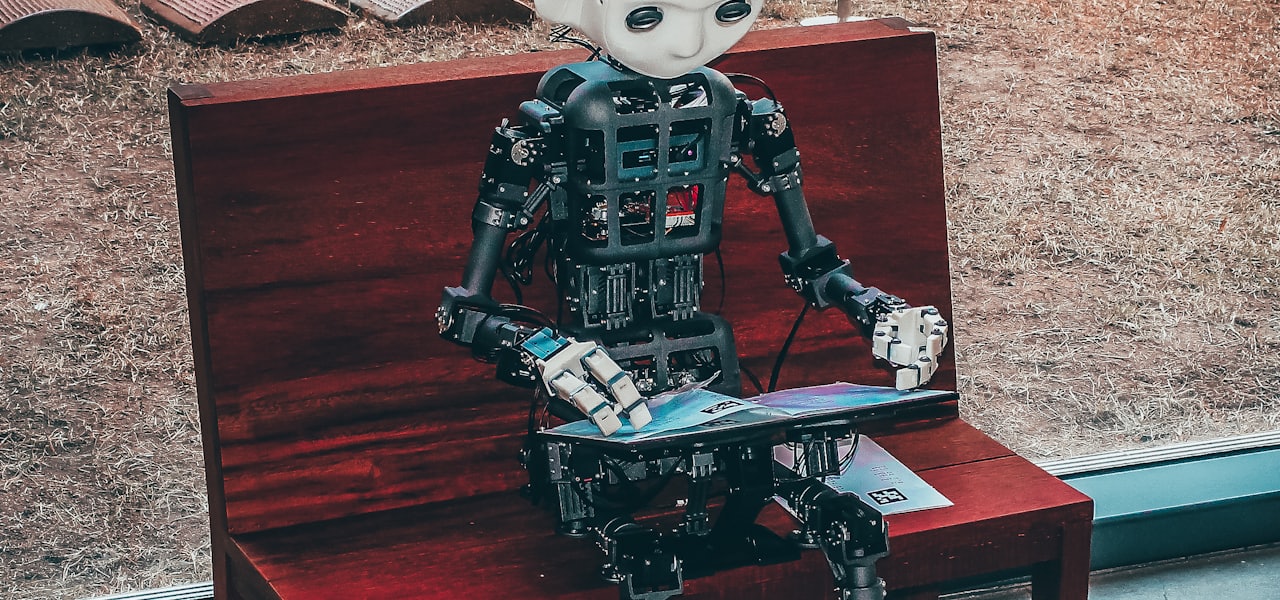
Creepiness is the state of being creepy, or causing an unpleasant feeling of fear or unease to someone and/or something. Certain traits or hobbies may make people seem creepy to others; interest in horror or the macabre might come across as 'creepy', and often people who are perverted or exhibit predatory behavior are called 'creeps'. The internet, especially some functions of social media, has been described as increasingly creepy. Adam Kotsko has compared the modern conception of creepiness to the Freudian concept of unheimlich. The term has also been used to describe paranormal or supernatural phenomena. Some people have phobias which are irrational fears, which can make them perceive something as creepy. == History and studies == "Creepiness" is subjective: for example some dolls have been described as creepy, while what makes something "creepy" or "strange" to someone might seem normal to someone else. The adjective "creepy", referring to a feeling of creeping in the flesh, was first used in 1831, but it was Charles Dickens who coined and popularized the term "the creeps" in his 1849 novel David Copperfield. In the 20th century, association was made between involuntary celibacy and creepiness. The concept of creepiness has only recently been formally addressed in social media marketing. The sensation of creepiness has only recently been the subject of psychological research, despite the widespread colloquial use of the word throughout the years. Francis T. McAndrew of Knox College is the first psychologist to do an empirical study on creepiness. == Causes == The state of creepiness has been associated with "feeling scared, nervous, anxious or worried", "awkward or uncomfortable", "vulnerable or violated" in a study conducted by Watt et al. This state arises in the presence of a creepy element, which can be an individual or, as recently observed, new technologies. === Individuals === Creepiness can be caused by the appearance of an individual. Another study investigated the characteristics that make people creepy. Creepy people were thought to be more often male than female by an overwhelming majority of participants (around 95% of both male and female participants). Another study conducted by Watt et al. also found that participants associated the ectomorphic body type (more linear) with creepiness, more than the other two body types (51% vs mesomorphic, 24% and endomorphic, 23%). Other cues of creepiness included low hygiene, especially according to female participants, and a disheveled appearance. Participants also identified the face as an area with potentially creepy features: in particular the eyes and the teeth. Both of those physical features were deemed creepy not only for their unpleasant appearance (ex. squinty eyes or crooked teeth) but also for the movements and expressions they engaged it (ex. darting eye movements and odd smiles). In fact, appearance does not seem to be the only factor making an individual creepy: behaviors provide cues as well. Behaviors such as "being unusually quiet and staring (34%), following or lurking (15%), behaving abnormally (21%), or in a socially awkward, "sketchy" or suspicious way (20%)" are all contributing to a feeling of creepiness, as described by Watt et al.'s study. === Technology === In addition to other individuals, new technologies, such as marketing's targeted ads and AI, have been qualified as creepy. A study by Moore et al. described what aspect of marketing participants considered creepy. The main three reasons are the following: using invasive tactics, causing discomfort and violating of norms. Invasive tactics are practiced by marketers that know so much about the consumer that the ads are "creepily" personalized. Secondly, some ads create discomfort by making the consumer question "the motives of the company advertising the product". Finally, some ads violate social norms by having inappropriate content, for example by unnecessarily sexualizing it. It is marketing's extensive knowledge used in an improper way, together with a certain loss of control over our data, that creates a feeling of creepiness. Another creepy aspect of technology is human-looking AI: this phenomenon is called the uncanny valley. Humans find robots creepy when they start closely resembling humans. It has been hypothesized that the reason why they are viewed as creepy is because they violate our notion of how a robot should look. A study focusing on children's responses to this phenomenon found evidence to support the hypothesis. == Evolutionary explanation == Several studies have hypothesized that creepiness is an evolutionary response to potentially dangerous situations. It could be linked to a mechanism called agent detection which makes individuals expect malignant agents to be responsible for small changes in the environment. McAndrew et al. illustrates the idea with the example of a person hearing some noises while walking in a dark alley. That person would go in high alert, fearing that some dangerous individual was there. If that was not the case the loss would be small. If, on the other hand, a dangerous individual was actually in the alley and the person had not been alerted by this creepy feeling, the loss could have been significant. Creepiness would therefore serve the purpose of alerting us in situations in which the danger is not outright obvious but rather ambiguous. In this case, ambiguity both refers to the possible presence of a threat and to its nature, sexual or physical for example. Creepiness "may reside in between the unknowing and the fear" in the sense that individuals experiencing it are unsure if there truly is something to fear or not. Creepy characteristics are not simply caused by threat potential: in fact, ectomorphic body types are not the most powerful bodies and facial expressions are not a proxy of physical strength either. Therefore, creepiness is not only related to how threatening a characteristic is, in the sense of how dangerous and strong the individual can be. There are more facets to consider. Another characteristic of creepiness is unpredictable behavior. Unpredictability links back to this idea of ambiguity. When an individual is unpredictable it is not possible to tell when their behavior will turn violent: this adds to the ambiguity of a potentially dangerous situation. This theory is endorsed by studies. Not only is unpredictability directly listed as a creepy characteristic, but other behaviors, such as norm-breaking behaviors are indirectly linked with unpredictability. Such behaviors show that the individual does not conform to some social standards others would expect in a given situation. For example, the aforementioned staring at strangers or lack of hygiene—behaviors that make us uneasy or creeped out because they do not fit the norm and therefore are not expected. More generally, participants tended to define creepiness as "different" in the sense of not behaving, or looking, socially acceptable. Such differences point towards a "social mismatch". Humans have a natural system of detection of such mismatch: a physical feeling of coldness. When an individual is creeped out, they report feeling those "cold chills". This phenomenon has been studied by Leander et al, with relation to nonverbal mimicry in social interactions, meaning the unintentional copying of another's behavior. Inappropriate mimicry may leave a person feeling like something is off about the other. Absence of non-verbal mimicry in a friendly interaction, or the presence of it in a professional setting, raises suspicion as it does not follow the relevant social norms. Individuals are left wondering what other unusual behavior the other might engage in.